 Sweden
Blow glass at a furnace among houses moved here plank by plank
Skansen is a hill on Djurgården covered in buildings that used to be somewhere else. Farmhouses, workshops, an entire timber church: taken down across Sweden, carried to the island and put back up, so that a walk across it is a walk across the country as it looked before anyone thought to keep it. In among them is a working glassworks with a furnace that runs all year, and it takes visitors at the pipe.
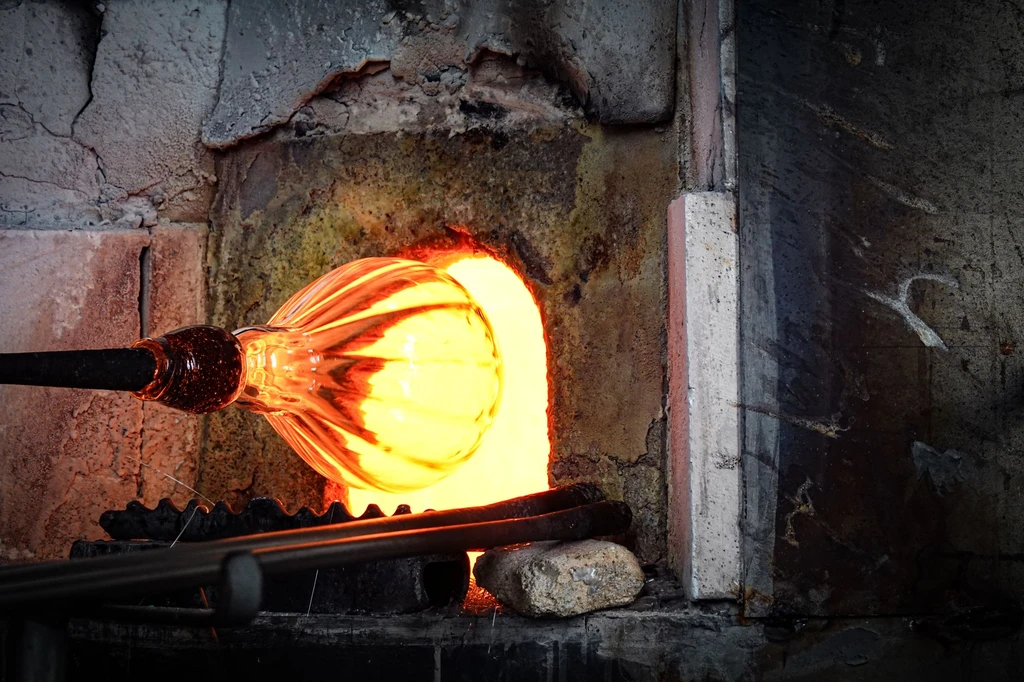
The way in is the little ferry across to Djurgården, about ten minutes of open water with the city sliding past, and then a walk up through the old houses. Inside the glassworks it is hot in a way that is welcome in December and startling in June. Someone is already working: a lump of orange on the end of a long pipe, turned constantly so it does not sag, shaped, put back in the furnace, brought out again.
Then the pipe is handed over. Blowing glass is mostly breath and doing what the glassblower says at the speed they say it, and the thing on the end of the pipe is a glass or a vase for most of the year and a bauble in December. Whatever it becomes, it comes out a little lopsided, which is how anyone can tell it was not bought, and it stays behind to cool rather than going straight into a pocket. That is the part nobody expects: leaving the island with the thing still on it, and getting it later with a breath sealed inside.
Skansen opened in 1891, the work of a man named Artur Hazelius who had noticed old Sweden disappearing, and it did the idea so thoroughly that across Central and Eastern Europe an open-air museum is now simply called a skansen. The church came from Västergötland between 1916 and 1918, every piece numbered, by horse and cart and then by train. The glassworks began in 1933 in a basement at Slussen and moved in 1936 into a building raised for it here, a reconstruction drawn from the Johannesholm glassworks in Dalarna and modeled on older works in Småland. One family has run it for three generations since.