Azores: Whales and Volcanoes
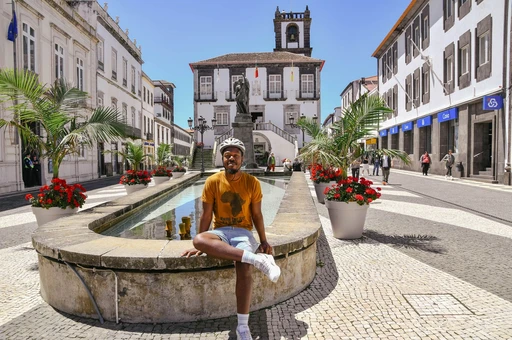 Ponta Delgada
→
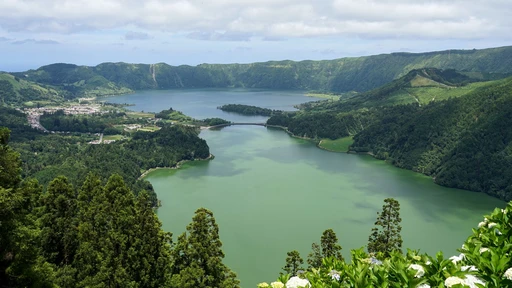 Sete Cidades
→
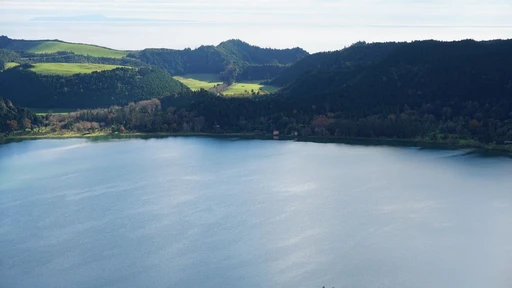 Furnas
→
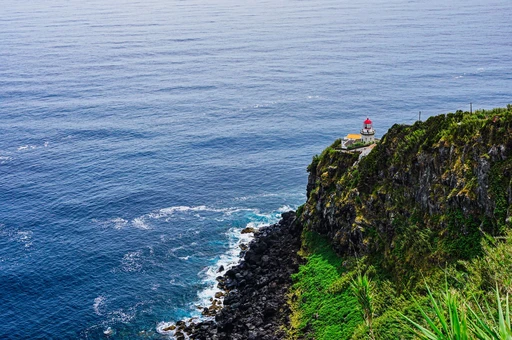 Povoação
→
Nordeste
→
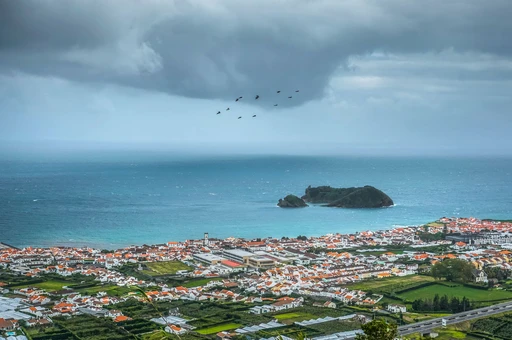 Vila Franca do Campo
What you’ll remember
5 of them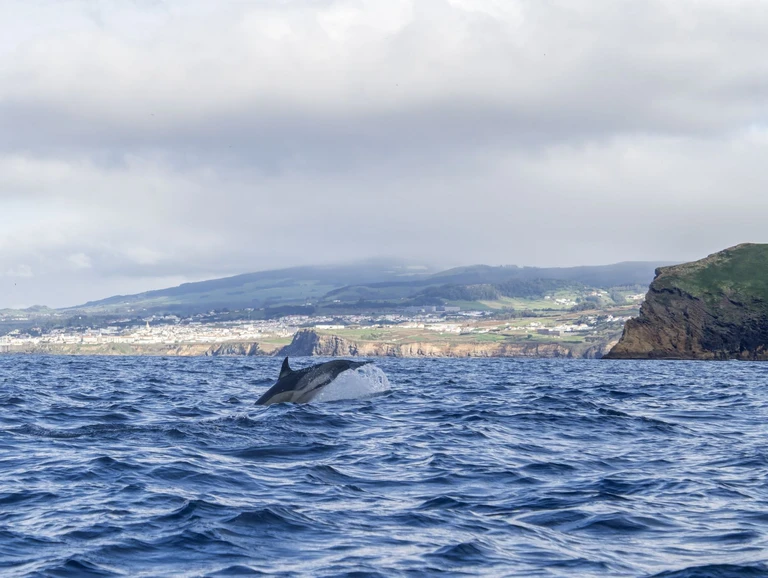 Day 2
Head out to a whale a lookout on the cliff has already found
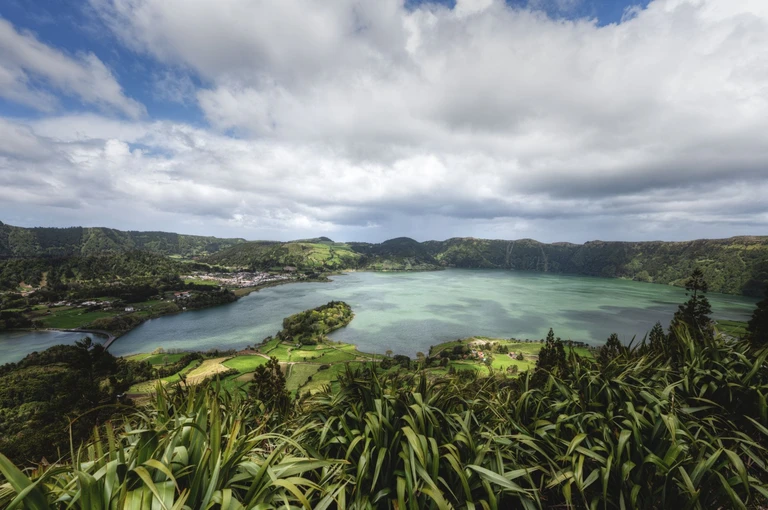 Day 3
Walk the rim of a crater with a village at the bottom
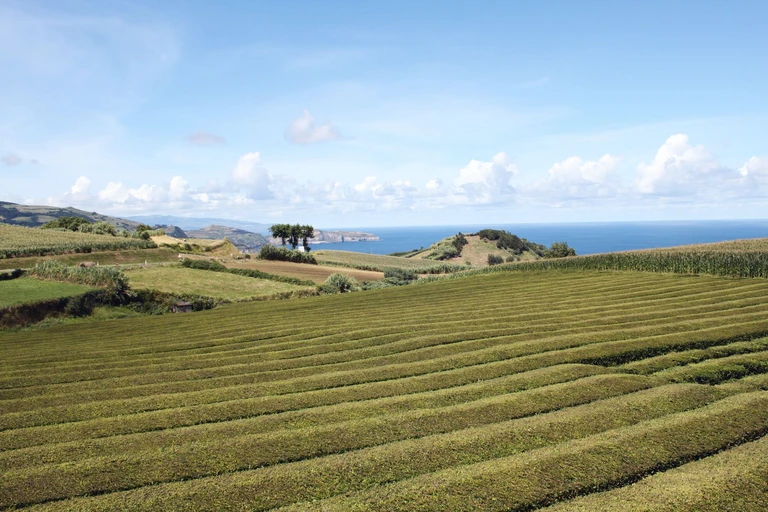 Day 4
Taste tea from the oldest plantation still working in Europe
 Day 6
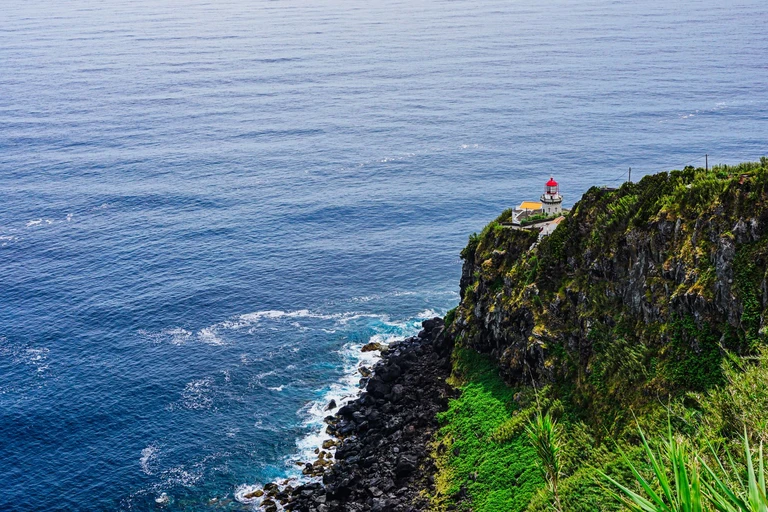
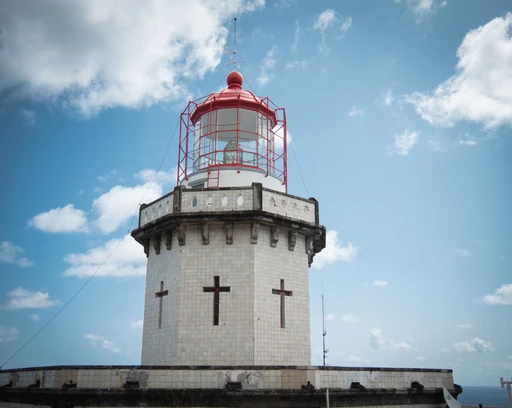
Walk down to the first lighthouse in the Azores
 Day 7
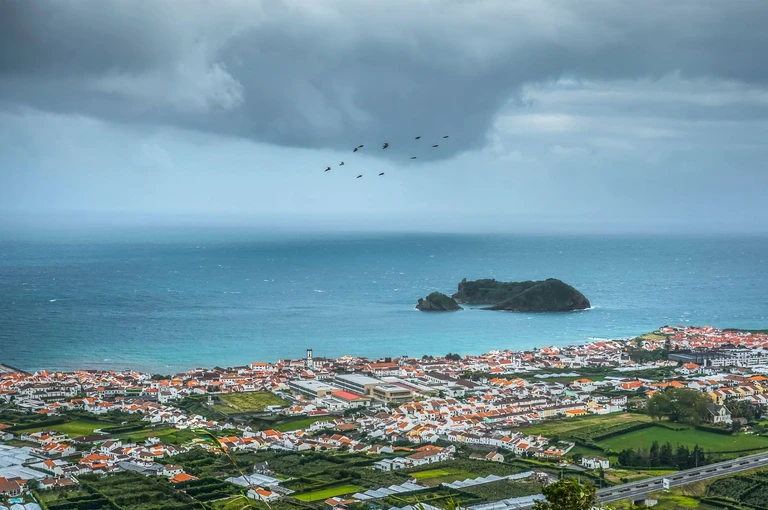
Step ashore inside a volcanic crater out at sea
What’s included
- Hotels every night
- Breakfast every morning
- Welcome dinner in Ponta Delgada
- 2 dinners
- Cozido lunch in Furnas
- Farewell dinner in Ponta Delgada
- All transport during the trip
- Whale watching
- 3 geothermal lagoons
- Boat to the Vila Franca islet
- All entry tickets
About this trip
Somebody on a cliff above the sea has been watching the water with binoculars since first light. At some point this morning they pick up the radio and tell your skipper where to go. That is how you meet your first whale off São Miguel. On this island, something is always already on it.
Mostly, it is the volcano. On the shore of a crater lake in Furnas it has been cooking your lunch in the ground all morning. In a garden a Boston merchant started in the 1780s it keeps a pool of orange spring water at about forty degrees. Out west it left a crater five kilometers wide, and people built a village at the bottom anyway. You walk the rim. You get in the pool. You eat the lunch.
Eight days on an island of about 133,000 people that grows tea, pineapples and its lunch in volcanic ground, with a group of people you had not met when the first whale came up.
Day by day
8 daysThree Arches Guarding Nothing
 Ponta Delgada
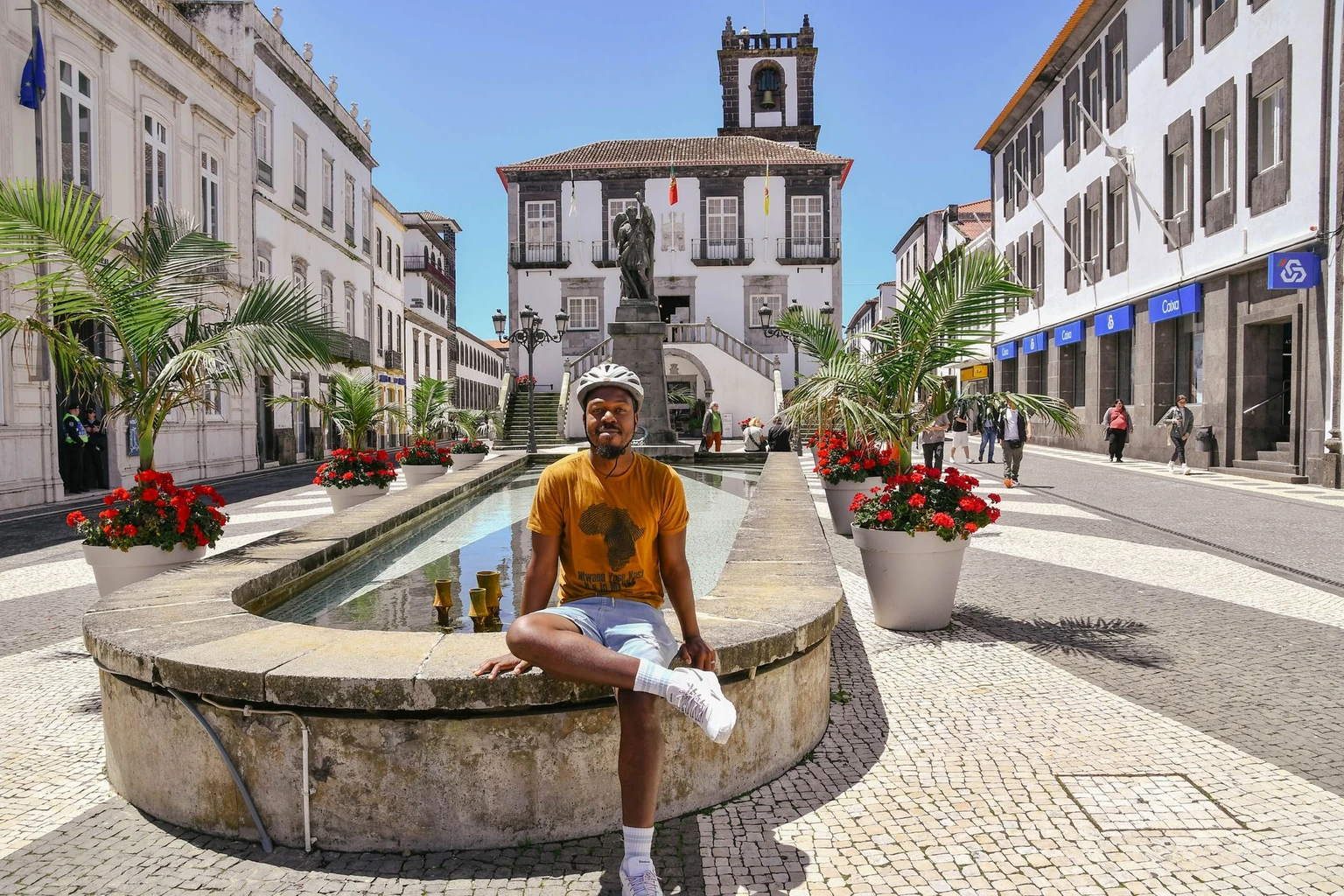
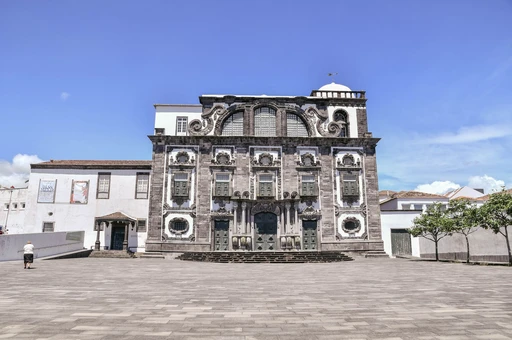
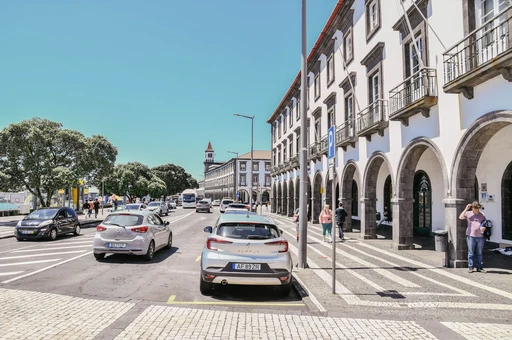
Ponta Delgada's city gates went up on the old harbor front in 1783. In 1952 the city wanted a seafront avenue there instead, so the gates were moved out of its way. Three stone arches, now guarding a square a short walk from the sea. They do it very well.
You arrive knowing nobody, or close enough. That lasts about a day. Your coordinator meets the group in the early evening for a first walk through the old center, then the welcome dinner, which is where everyone says what they do for a living and then, fairly quickly, stops.
This is the biggest town on an island of about 133,000 people, and tonight it is mostly a backdrop. Tomorrow starts early, on the water, and somebody on a cliff is already watching the sea for you.
Somebody on the Cliff Has the Radio
Ponta Delgada
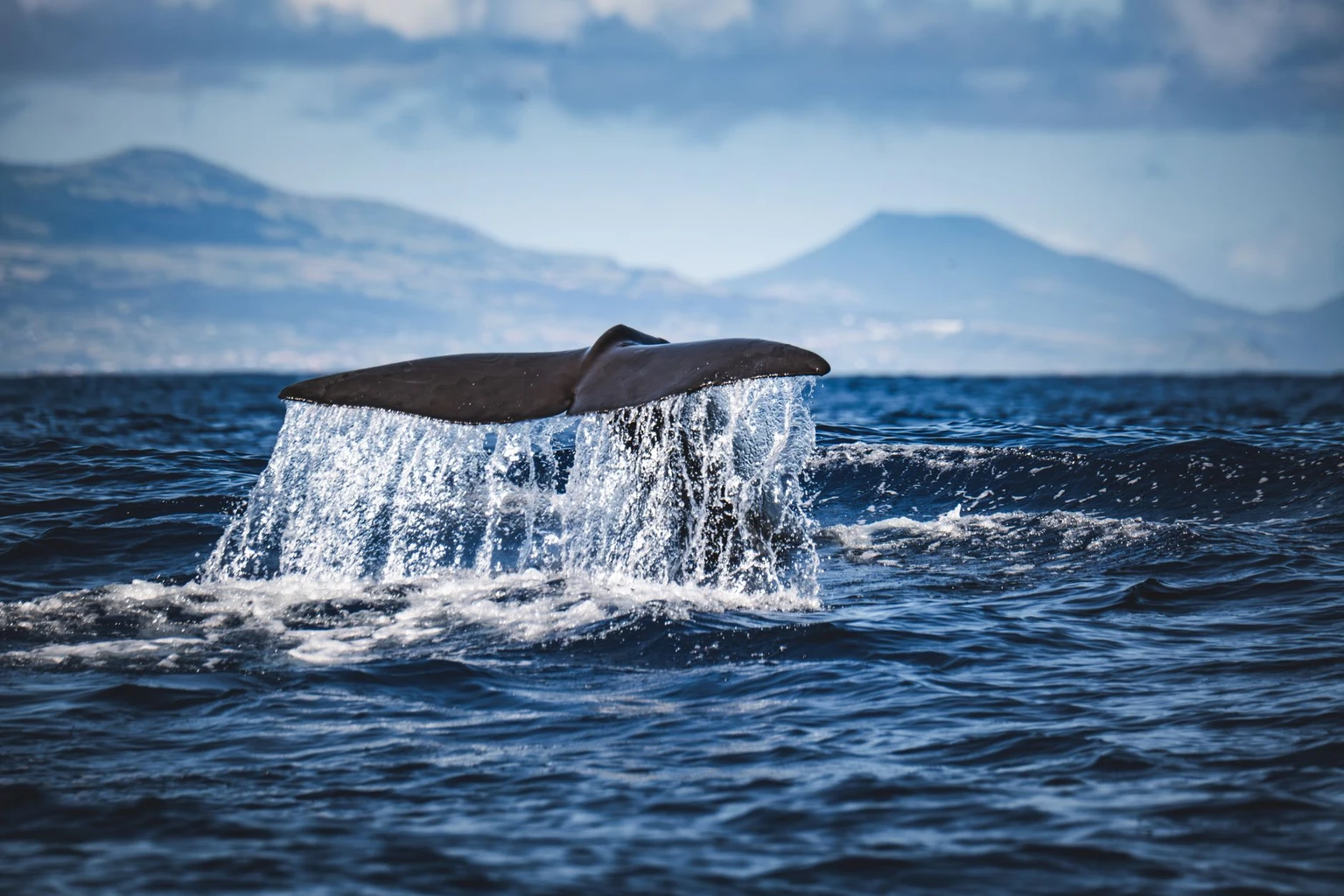
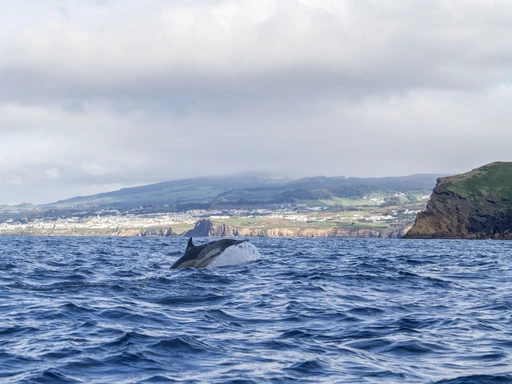
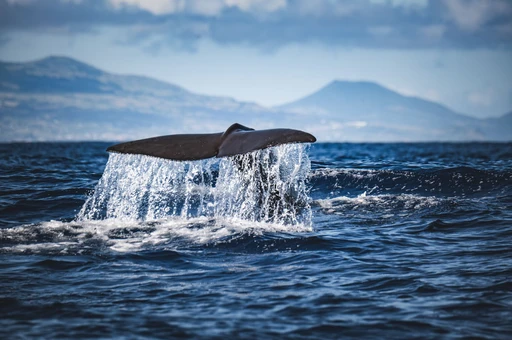
São Miguel kept its whale lookouts. The huts on the cliffs were built so a man with a telescope could spot sperm whales for the hunters. The hunting ended in the 1980s. The lookouts stayed, and changed sides. This morning one of them is up there with binoculars, and the skipper is listening to the radio.
About three hours at sea, with a marine biologist on board. In spring the big baleen whales come past on their way north: fin, sei, now and then a blue, the largest animal there has ever been. By September it is the sperm whales and big groups of dolphins. Common dolphins live here all year and tend to turn up for everyone. If the sea shows you nothing, you go out again later in the week.
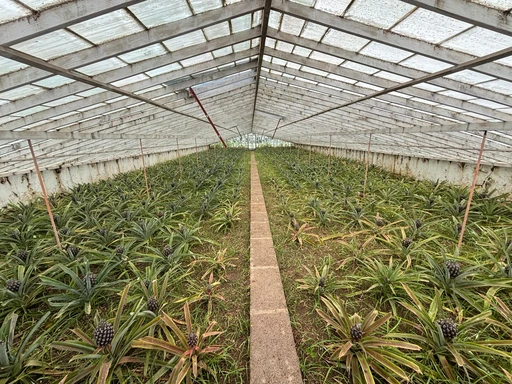
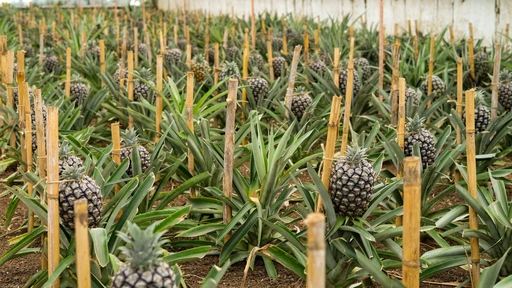
The afternoon is easy, on purpose. On the edge of town pineapples grow under whitewashed glass, about two years to a fruit. In 1874 somebody found out, by accident, that a greenhouse filled with smoke for a week makes every plant in it flower at once. Two years of waiting, one week of smoke. Then a free evening in town.
Nobody Agrees Whose Eyes Were Blue
Ponta Delgada
 Vista do Rei
Boca do Inferno
 Sete Cidades
Ponta da Ferraria
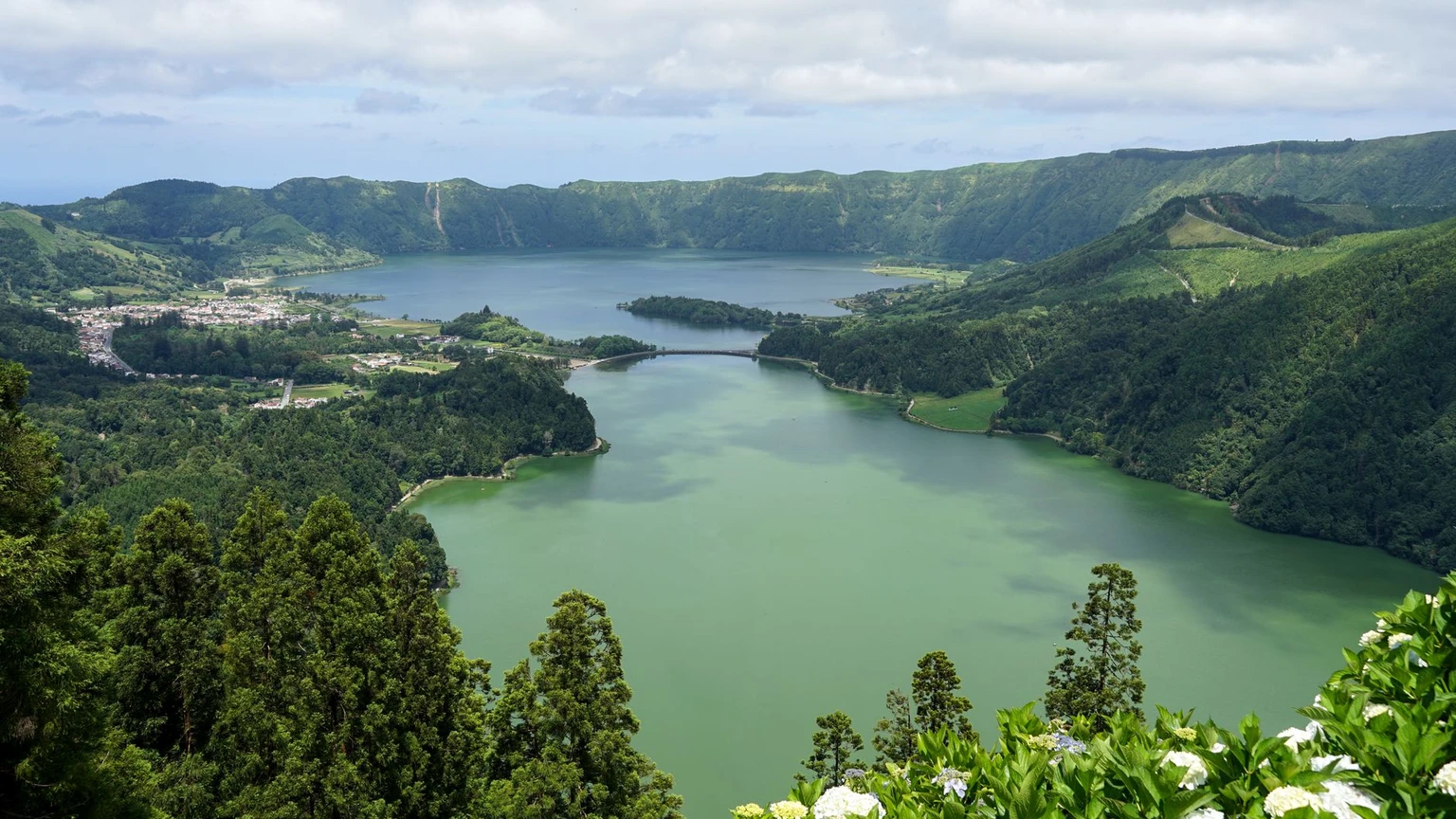
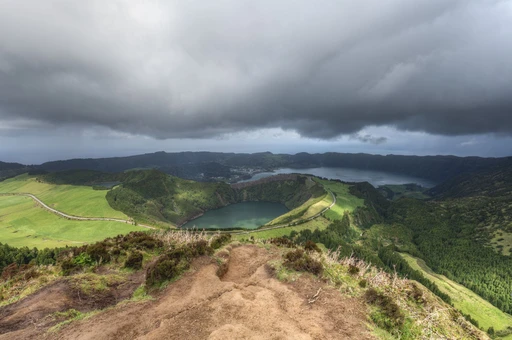
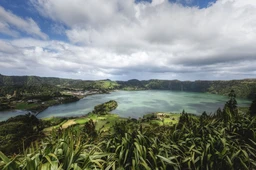
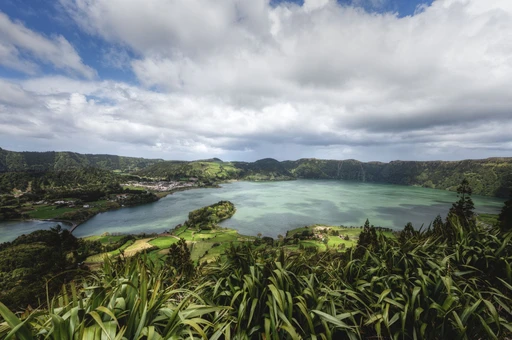
A princess with blue eyes and a shepherd with green ones were forbidden to marry, and between them they cried enough to fill two lakes, one of each color. Every version of the story agrees on the crying. They do not agree on whose eyes were which.
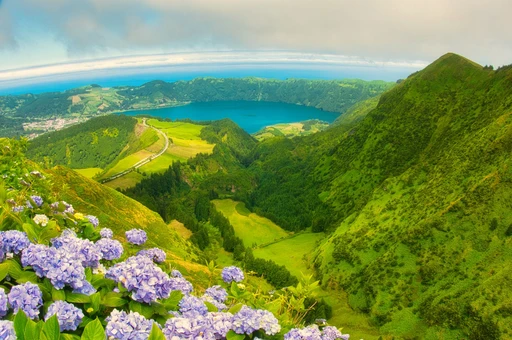
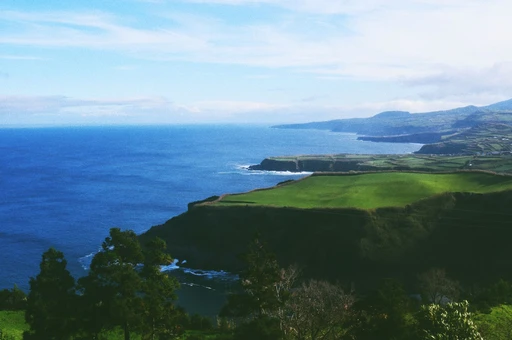
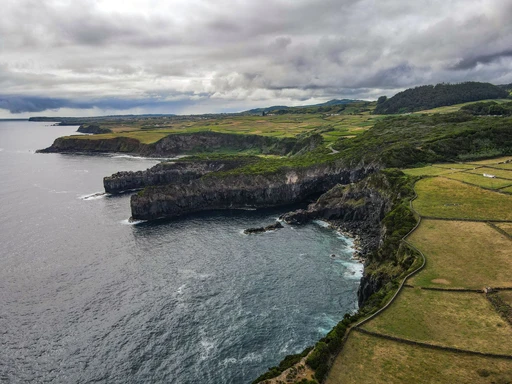
The lakes lie at the bottom of a crater about five kilometers across, and today you walk part of its rim, lakes on one side, Atlantic on the other. Fewer than eight hundred people live down there, in the village of Sete Cidades. Volcano number one. On a clear day it is the best view on the island. On a cloudy one the crater fills up like a bowl of milk, and the second half of the day does the heavy lifting.
That is Ponta da Ferraria, on the western tip, where a hot spring comes up through the rocks into the sea. When the tide is low you float in the ocean and feel the warm water arriving from underneath. The ground on this island, it turns out, also does the heating.
Two Men From Macau
Ponta da Ferraria
Ponta Delgada
 Lagoa do Fogo
Caldeira Velha
 Gorreana
 Furnas
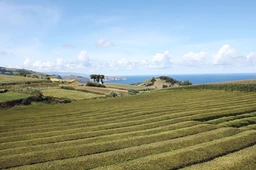
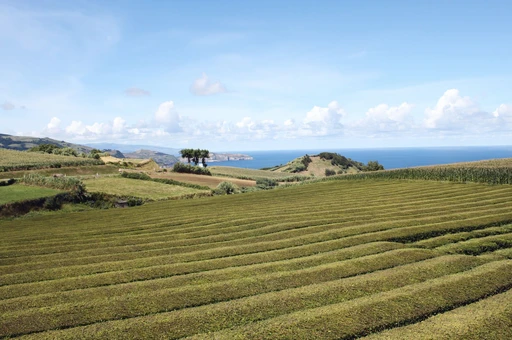
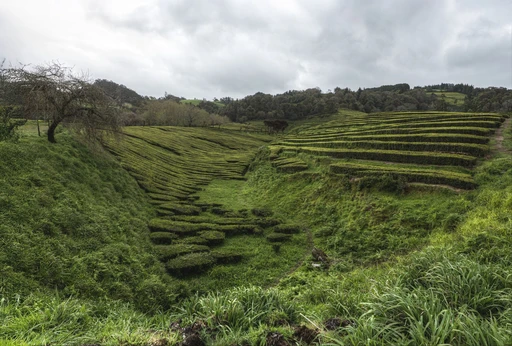
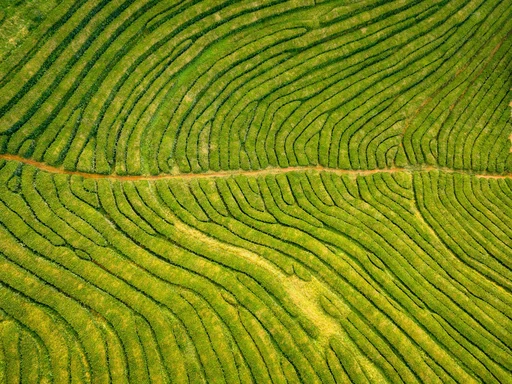
In 1878 São Miguel sent for two tea specialists from Macau, Lau-a-Pan and his interpreter Lau-a-Teng, to teach the island how it was done. In 1883 the first kilo of tea came off the slopes at Gorreana. The plantation has been at it ever since. It is the oldest one still working in Europe, its rows run down toward the sea, and the tasting is free.
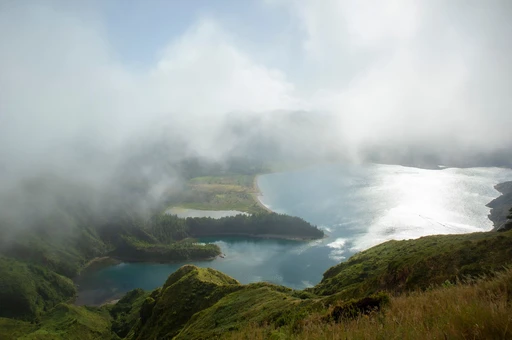
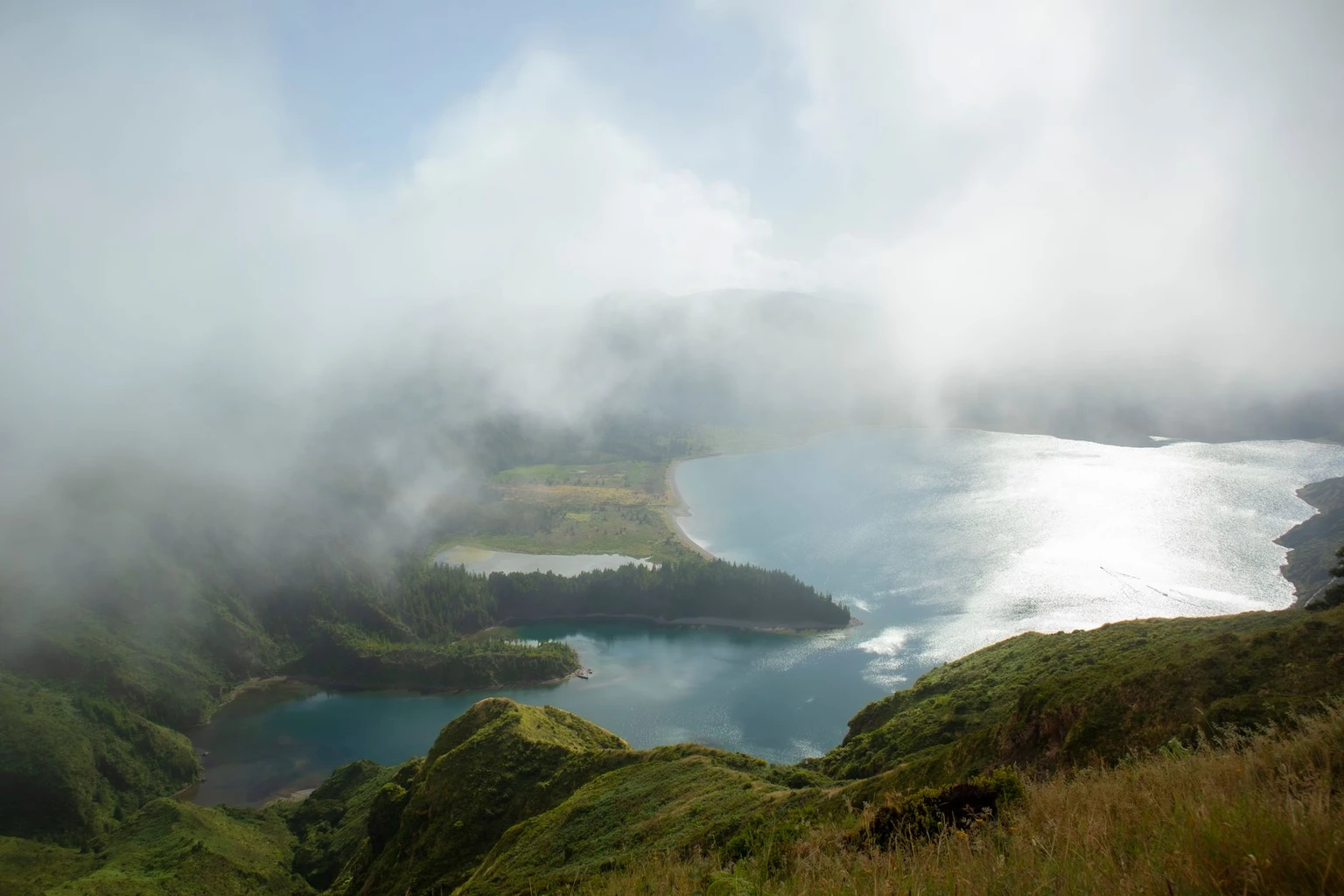
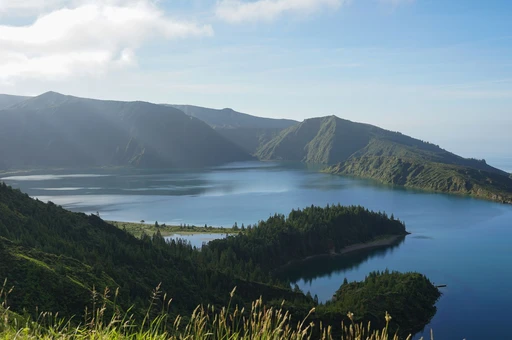
Before that, the middle of the island and volcano number two. Lagoa do Fogo is a lake in its crater, 575 meters up. Then Caldeira Velha, a hot stream in a forest of tree ferns, where the pools sit at about 38 degrees and a cooler waterfall comes down at one end. The bath has been run. Get in.
Tonight you sleep in Furnas, which is inside volcano number three. More on that tomorrow. Dinner in the village.
Lunch Has Been in the Ground All Morning
Furnas
 Lagoa das Furnas
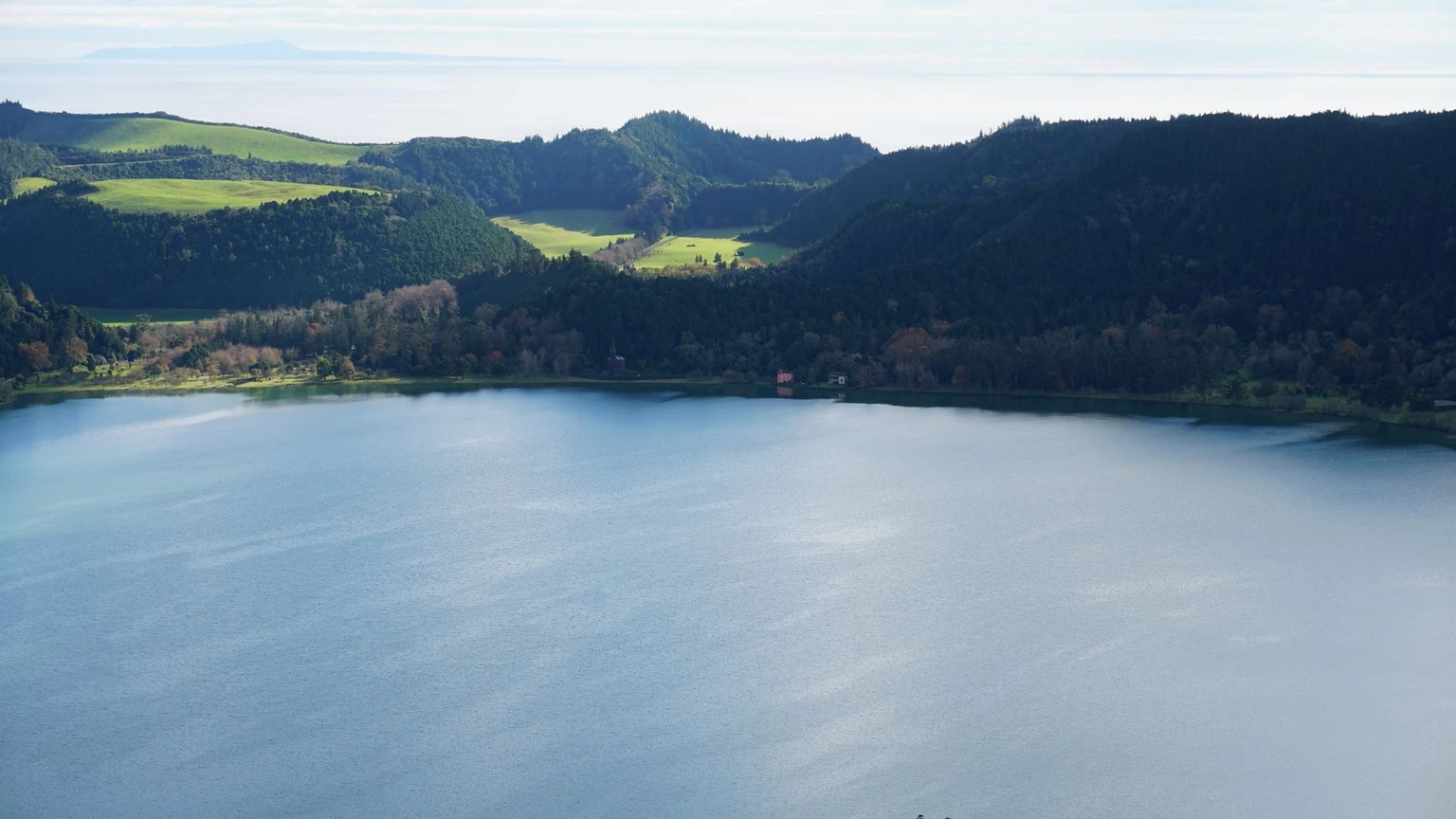
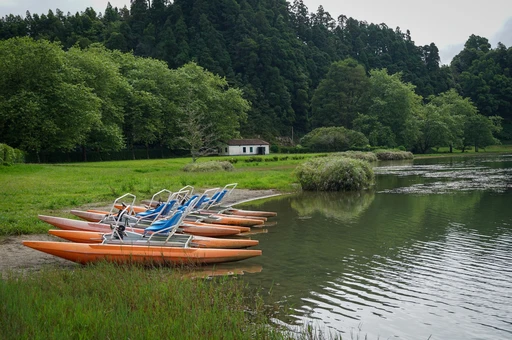
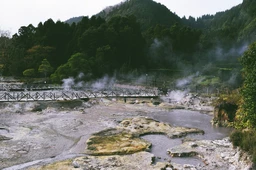
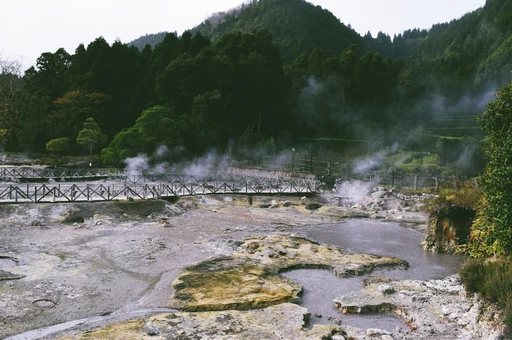
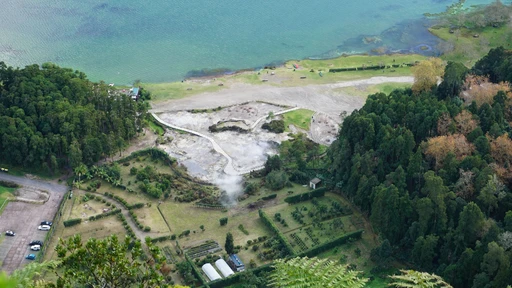
Furnas last erupted in 1630. The village sits in its crater anyway, and has given the volcano a job. On the shore of the lake the ground steams through holes in the earth, and early every morning the restaurants lower pots into them, beef, pork, chicken, sausage, cabbage and potatoes wrapped in cloth, and leave the volcano to it for most of the morning.
Around midday the pots come back up, and you are standing there when they do. Then the cozido itself, at the place people in Furnas send you when you ask them where to eat it. It is a great deal of food. You will say you are not hungry until dinner, and you will be right.
The afternoon is Terra Nostra, a garden a Boston merchant started in the 1780s around a pond of spring water. The pond is now a pool. It is orange. It is about forty degrees. Bring a dark swimsuit: the iron in the water stains light ones.
The Rarest Bird You Probably Won't See
Lagoa das Furnas
Furnas
Povoação
Ponta do Sossego
Ponta da Madrugada
Nordeste
 Farol do Arnel
Pico da Vara
The priolo is a small bullfinch that lives in one stretch of old laurel forest at the eastern end of São Miguel and nowhere else on Earth. In the late 1970s fewer than forty pairs were thought to be left. After years of replanting the forest it depends on, there are now somewhere between 500 and 800 pairs. That is a real comeback, and it is still not many birds for one forest. You might see one. Bring patience rather than expectations.
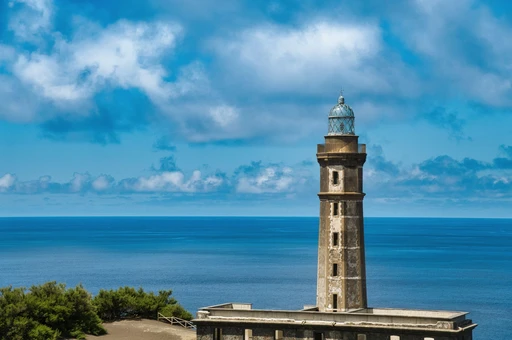
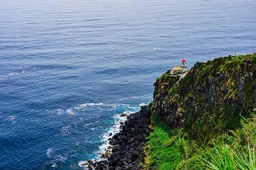
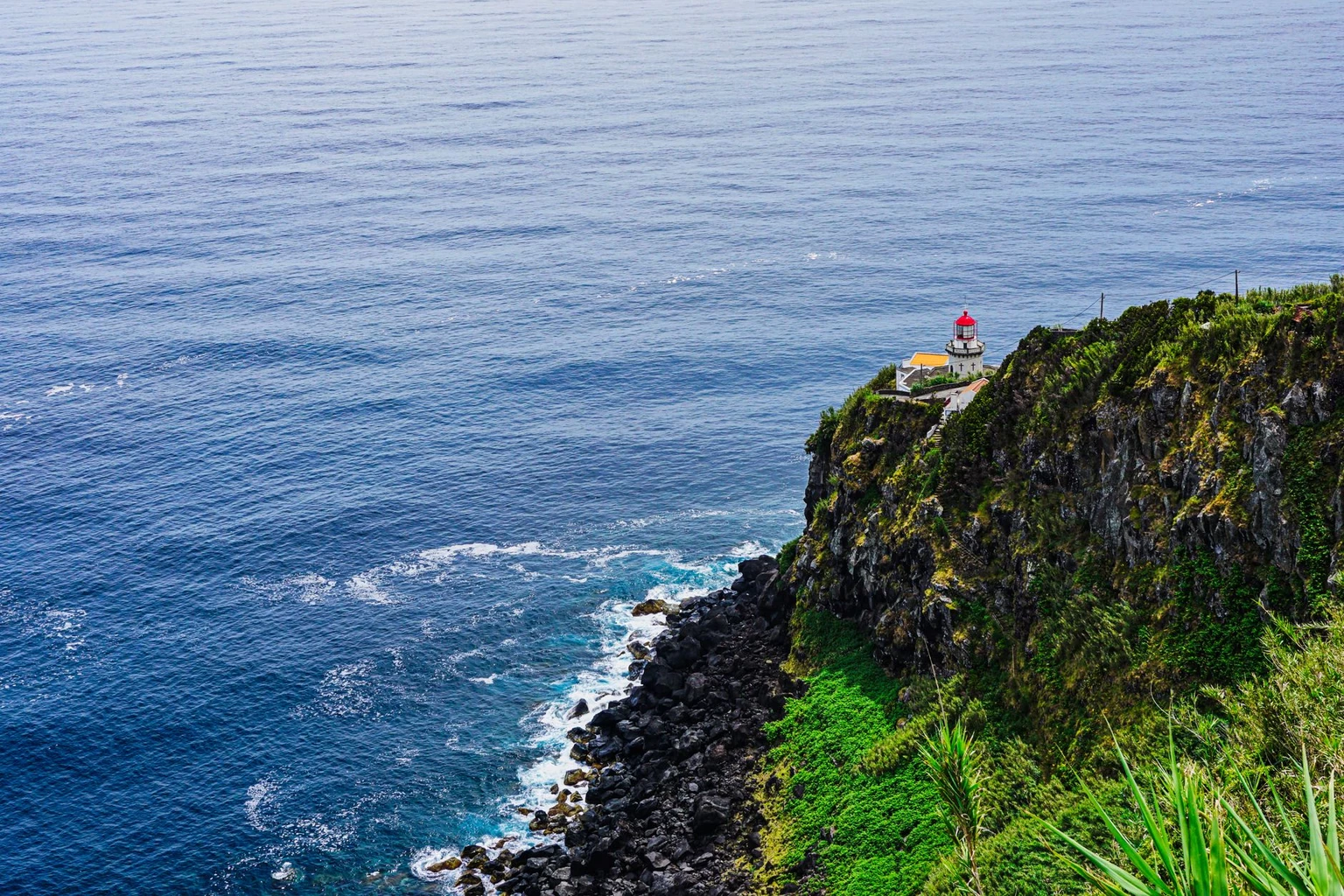
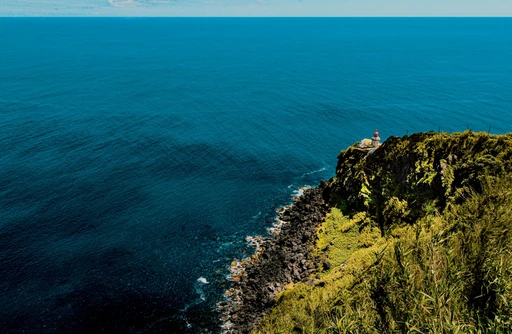
The rest of the Nordeste is easier to find: viewpoints laid out as terraced gardens above the sea, and the first lighthouse ever built in the Azores, lit in 1876 at the bottom of a road too steep to drive. You walk down. The walk back up is short, and it is the steepest thing on this trip.
Back in Furnas for the evening, and warm water once more, in a pool in the village that stays open late. The volcano is still on shift. Then dinner.
Volcano Number Four
Pico da Vara
Furnas
 Vila Franca do Campo
Ilhéu de Vila Franca do Campo
Ponta Delgada
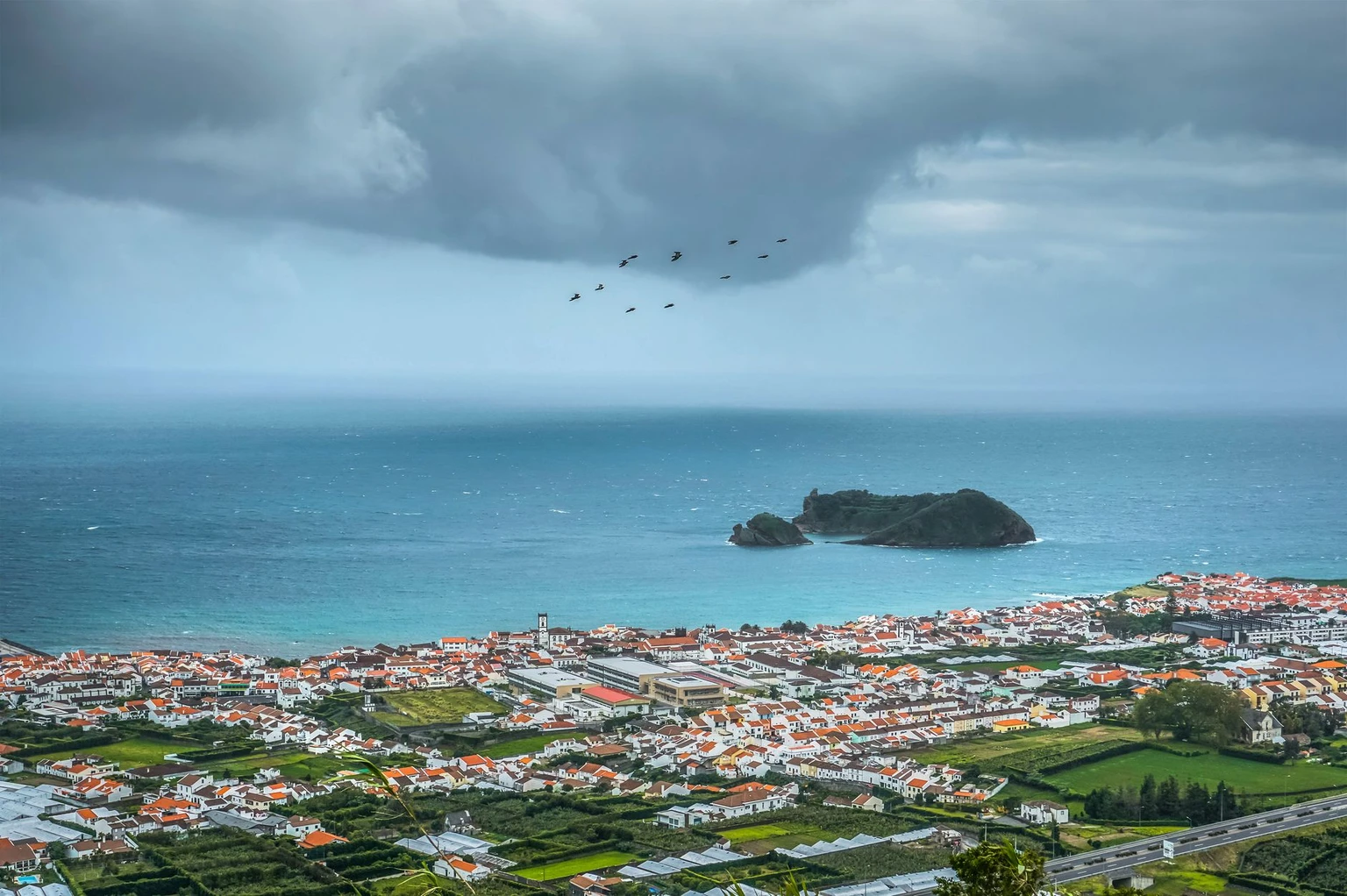
Just off Vila Franca do Campo an old volcanic crater sticks up out of the sea, broken open on one side, with a round lagoon inside it. It is a nature reserve, the number of people allowed onto it each day is capped, and this morning some of them are you.
From the middle of June the lagoon is open for swimming. Before that, a guide walks you around inside the reserve instead. Either way you are standing in your fourth volcano of the week, and by now that feels completely normal, which may be the strangest thing about this island.
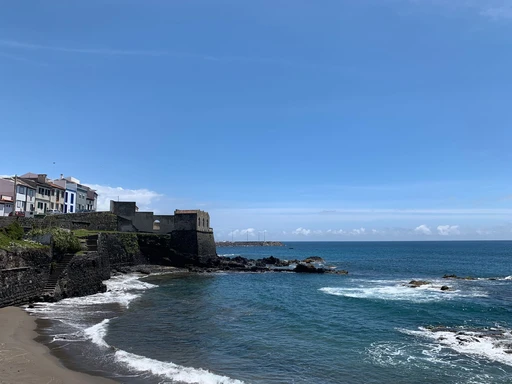
Vila Franca was the island's capital until 1522, when an earthquake and the landslide it set off buried most of the town. Then back to Ponta Delgada for the farewell dinner, where somebody brings up the whale from day 2, and it has grown several meters since.
Back Through the Gates
Ponta Delgada
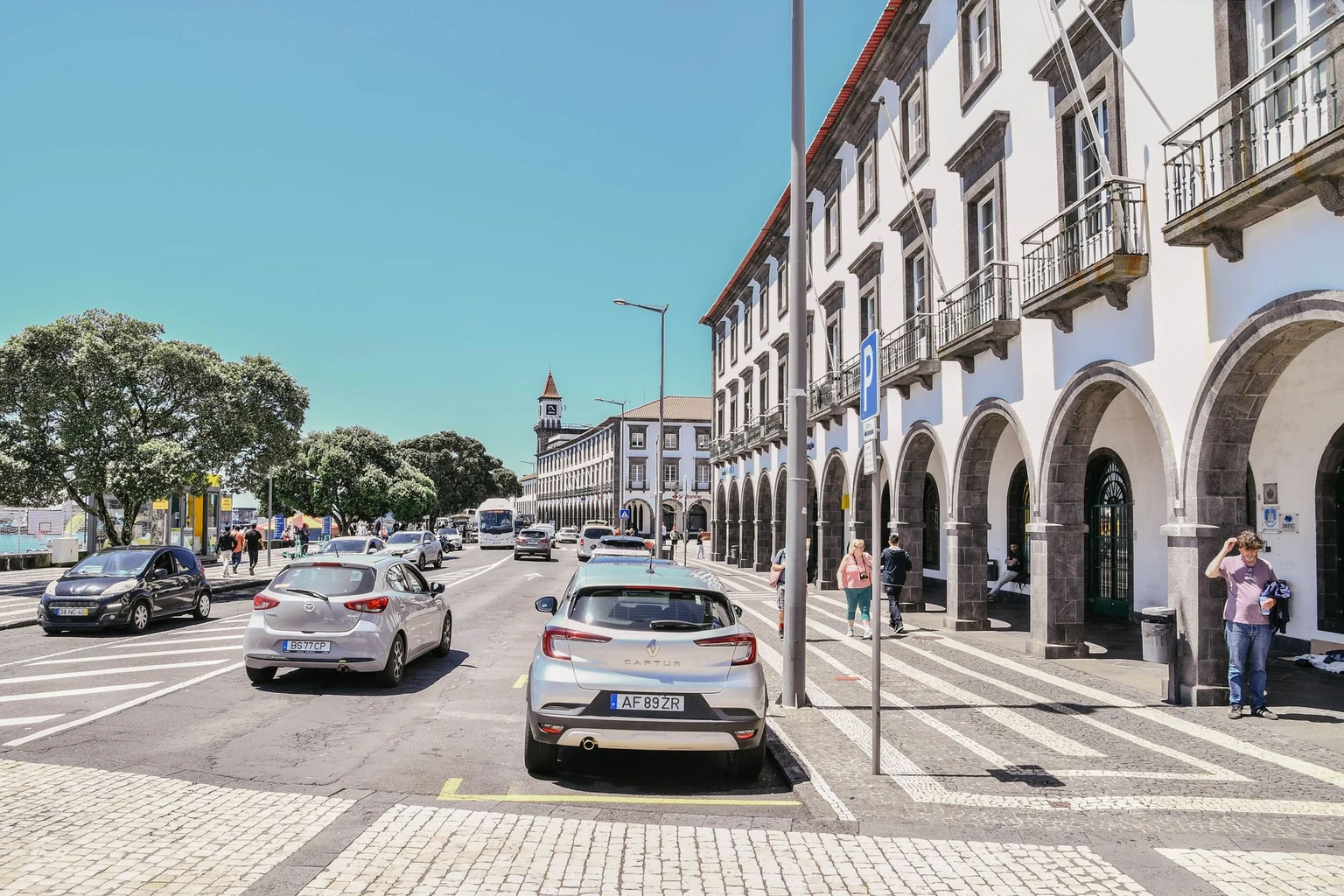
Last morning, and the gates from day 1 again. They have not moved since 1952. You have been inside four volcanoes since you walked past them. Now there is a group chat named after a whale, a camera roll that is mostly crater, and a lot of people to say goodbye to who were strangers a week ago. Hugs by the harbor.
Anyone with a late flight has the old center for a few more hours. Somebody will buy a jar of pineapple jam they do not need. That is fine. You saw on day 2 how long it takes to grow one.
Upcoming trips
8 trips
Ponta Delgada·8 days
Coordinator
?To be announced
$2,389 / person
Available
Ponta Delgada·8 days
Coordinator
?To be announced
$2,389 / person
Available
Sat 15–Sat 22 May
Ponta Delgada·8 days
Coordinator
?To be announced
$2,389 / person
Available
Sat 29 May–Sat 5 Jun
Ponta Delgada·8 days
Coordinator
?To be announced
$2,389 / person
Available
Ponta Delgada·8 days
Coordinator
?To be announced
$2,389 / person
Available
Sat 26 Jun–Sat 3 Jul
Ponta Delgada·8 days
Coordinator
?To be announced
$2,389 / person
Available
Ponta Delgada·8 days
Coordinator
?To be announced
$2,389 / person
Available
Sat 18–Sat 25 Sep
Ponta Delgada·8 days
Coordinator
?To be announced
$2,389 / person
Available
Ask us to run one for your group →
Paying and canceling
Canceling is free until a trip confirms. From the day it does: